
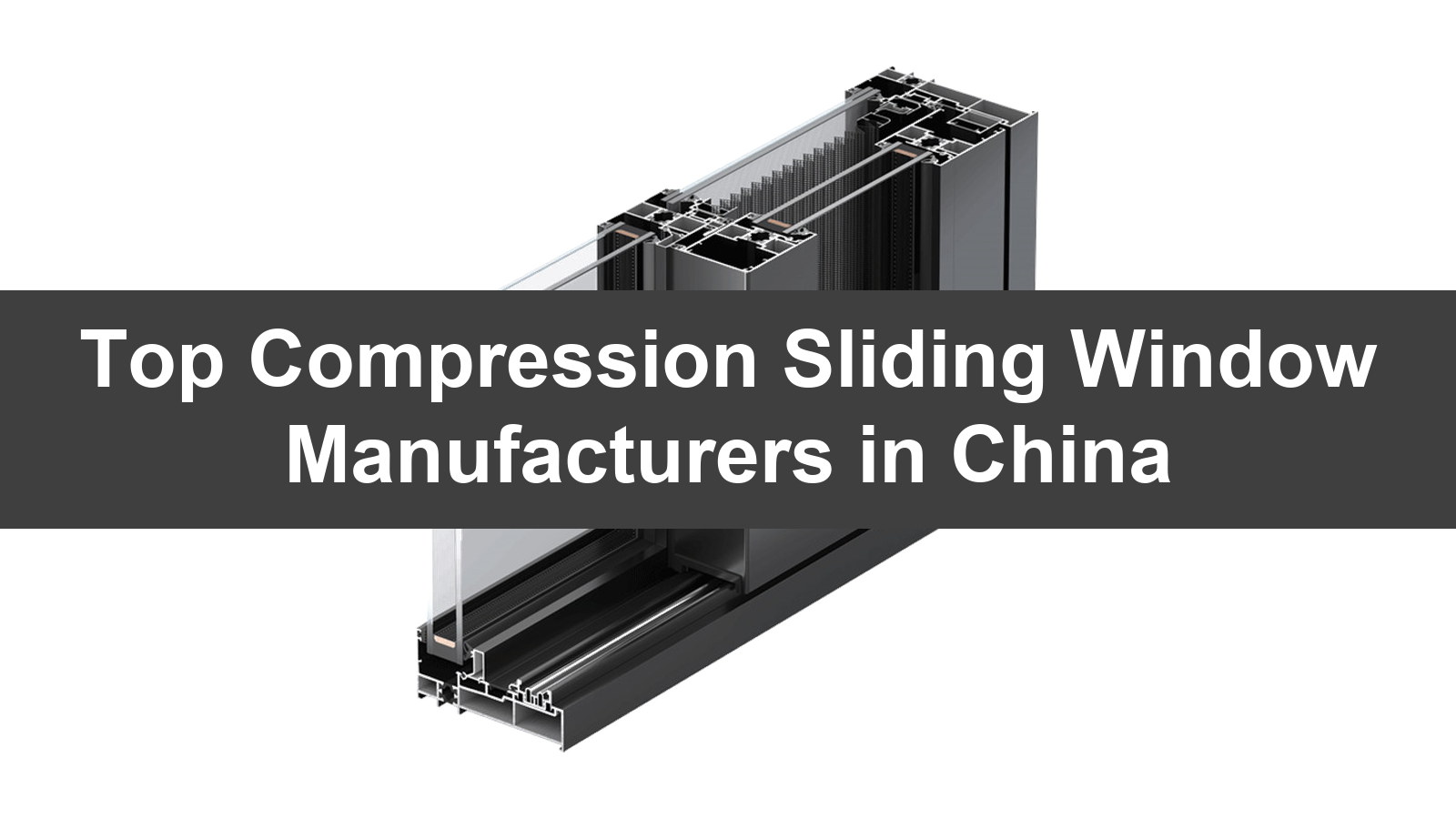
Are you looking for a sliding window that actually seals, instead of one that only keeps the rain out most of the time? Do you want to find a China manufacturer that offers a genuine compression cycle, tested air and water performance, and hardware you can service in your market? Or are you hoping to source a side-press system that fits your opening sizes without paying for a full casement system?
If the answer is yes, then China is your best choice. China boasts a mature supply chain for compression sliding windows, from the dedicated side-press hardware sets and EPDM gaskets to thermal break profiles and finished fabrication, which is why overseas distributors and project buyers increasingly source this category here. Below, we present leading compression sliding window manufacturers in China to help you quickly find the right partner.
Quick Navigation
- Anpu Doors & Windows Technology
- Taiyang (Taiyang Window & Door)
- CIVO (Foshan CIVO Technology)
- Yujingxuan Doors and Windows
- ORM Windows
- EEHE Doors & Windows
- Foshan Angle Doors and Windows
- PAIYA Windows & Doors
- China Loong Door-Window
- ROPO (Fuzhou Ropo Building Materials)
1. Anpu Doors & Windows Technology
Website: https://anpudw.com/
Headquarters / Supply Model: Nanjing-based manufacturer (Jiangning), established in 2013, operating a plant of about 10,000 m² with a stated annual capacity of 100,000 m². Sells direct to project buyers and distributors.
Core Products / Technologies: A side-compression system window in which the active sash is pulled horizontally against the frame gaskets during the final locking phase. The specification sheet lists the opening type as "Sliding with Active Horizontal Gasket Compression", uses EPDM gaskets instead of brush pile, and cites a 50,000-cycle operation figure. The company also offers outward-opening specialty windows.
Why Consider Anpu: This is the only entry in this list that describes the compression mechanism in engineering terms — locking phase, gasket compression, cycle count — rather than marketing language. For a buyer, that makes it a useful benchmark: when another supplier quotes a "high-sealing sliding window", you can ask whether the sash actually translates against the gasket, and how far. A factory of 10,000 m² is small enough to take custom sizes seriously.
Best Suited For: Buyers who need a true compression cycle on a sliding window rather than a sliding sash with a brush seal, especially for projects where air leakage or dust ingress is the real problem.
Before Purchasing: Confirm the compression stroke in millimetres, the gasket material and hardness, and the hardware brand behind the locking mechanism. Ask for the air and water test report at the sash size you intend to order, and check whether the 50,000-cycle figure applies to the specific hardware set in your quote.
2. Taiyang (Taiyang Window & Door)
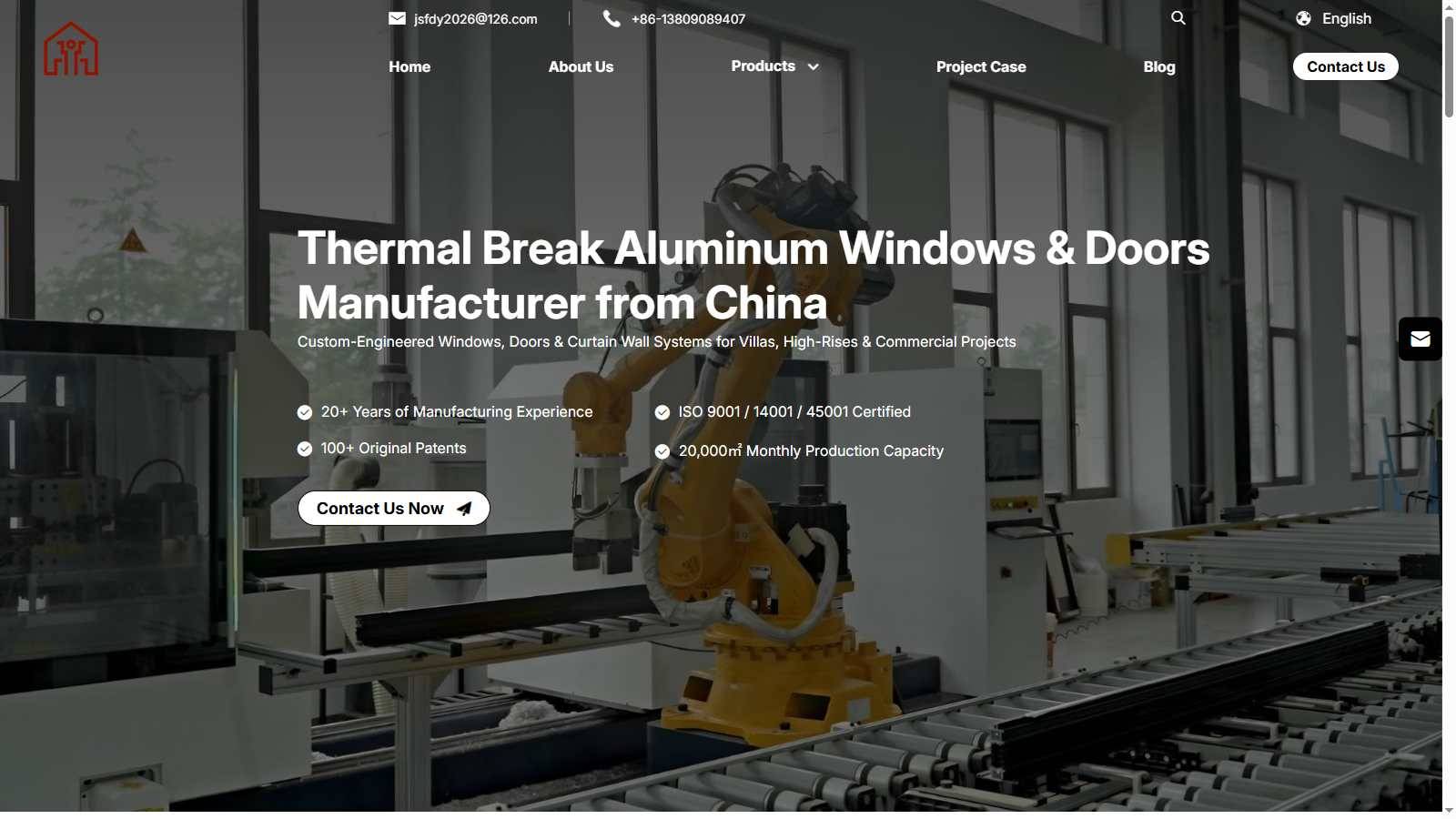
Website: https://www.taiyangwindowdoor.com/
Headquarters / Supply Model: Taiyang Decoration Engineering Co., Ltd., based at No. 3 Fuhai Road, Tongzhouwan Demonstration Zone, Nantong, Jiangsu. Founded in 2003, operating a 21,193 m² facility with a stated capacity of about 20,000 m² per month and 360+ employees, under ISO 9001, ISO 14001 and ISO 45001 systems.
Core Products / Technologies: Thermal break aluminum windows, panoramic and sliding doors available in lift-and-slide and standard sliding configurations, aluminum sunrooms, and unitized or stick-built curtain wall. The sliding range is built around multi-point sealing systems intended to resist wind and water infiltration at panel interfaces, with slim sightlines to maximize glass area. The catalog also covers off-axis doors and a heavy-duty pivot door system.
Why Consider Taiyang: For buyers who need sliding systems as part of a larger package — windows, doors, sunrooms and curtain wall from one factory — the appeal is consolidation without dropping to a small workshop. The sliding range addresses airtightness through multi-point sealing at the panel interfaces rather than a single gasket line, and the factory runs a documented four-stage process from technical drawing to export packing, which matters when the same unit has to be repeated across several buildings.
Best Suited For: Distributors, contractors and developers who want sliding windows and doors coordinated with curtain wall and sunrooms, and who value one quality system across the whole package.
Before Purchasing: The published catalog does not name a dedicated side-compression sliding model, so ask directly whether a compression-seal variant is available in the series you want, and which mechanism the standard sliding unit uses — brush seal, multi-point gasket, or an active compression cycle. Confirm the air and water values for the exact sash size, and check the hardware brand and gasket specification before comparing prices with a specialist side-press supplier.
3. CIVO (Foshan CIVO Technology)
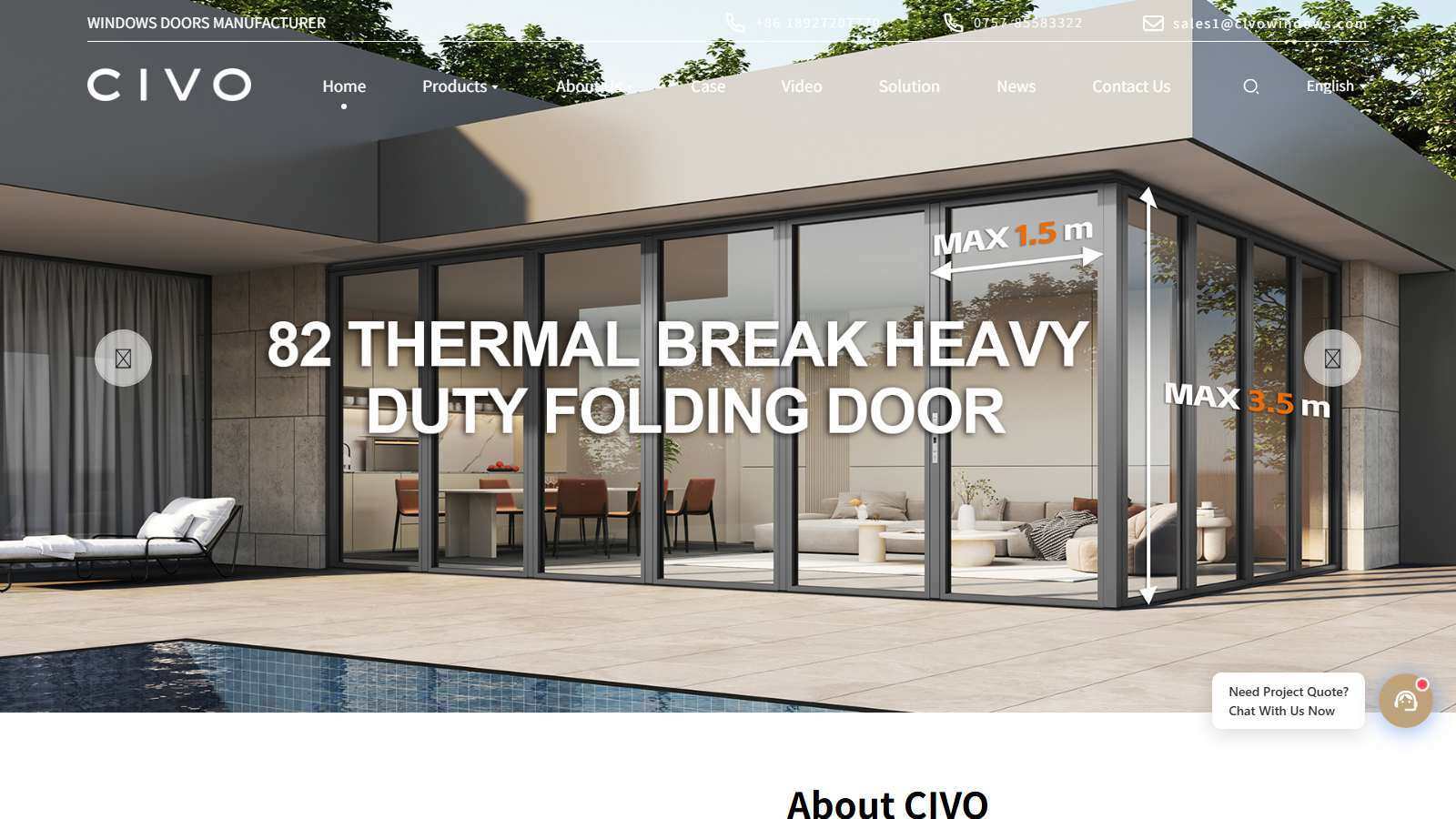
Website: https://civowindows.com/
Headquarters / Supply Model: Foshan-based manufacturer established in 2016, with a 40,000 m² facility, a profile stock warehouse reported at 5,000 tons, and a domestic retail network of 200+ stores. Supplies both branded retail and project/OEM customers.
Core Products / Technologies: A 118 thermal-broken side-press horizontal moving window built on what the company calls a new-generation translational side-pressure hardware system, with Yale and CMECH hardware referenced. Published performance grades for the series are air permeability level 8, water tightness level 6 and wind load level 9. The wider catalog covers thermal break casement, folding and sliding systems.
Why Consider CIVO: Performance grades with numbers attached are rare in this niche, and CIVO publishes them alongside a named hardware platform. That lets a buyer compare quotes on data instead of adjectives, and the named hardware means spare parts and service kits are obtainable rather than proprietary. A 40,000 m² plant with a large profile warehouse also points to shorter lead times on repeat orders.
Best Suited For: Distributors and project buyers who want a documented performance grade and a hardware platform they can service locally, rather than a black-box system.
Before Purchasing: Ask which test standard the 8/6/9 grades refer to — GB/T 7106 and the EN 12207/12208/12210 series are not interchangeable — and confirm the figures apply to your sash size, glazing build-up and opening configuration. Request the report, not just the marketing grade.
4. Yujingxuan Doors and Windows
Website: https://yujingxuanwindows.com/
Headquarters / Supply Model: Foshan-based manufacturer with roughly ten years of operation, a 5,000 m² workshop and 80+ staff, exporting to more than 32 countries. Works as a direct factory for distributors and project buyers.
Core Products / Technologies: A 118 Side Compression Window that the company describes as adopting side compression sealing technology, with the sash pressed tightly toward the frame and gaskets fully compressed for a zero-gap seal. The catalog also covers standard sliding, casement and fixed windows for residential projects.
Why Consider Yujingxuan: The product is literally named "Side Compression Window", which removes the ambiguity that plagues this category — you are not guessing whether "high-sealing sliding" means a brush seal or an actual compression cycle. The factory is small enough that custom sizes and small batches are realistic, and a 32-country export base suggests the packing and documentation side is already worked out.
Best Suited For: Small and mid-sized distributors, villa projects and renovation buyers who need a named side-compression model in modest volumes.
Before Purchasing: At 5,000 m², capacity is the main constraint — confirm the lead time for container volumes before committing to a schedule. Ask for the gasket material and the hardware brand, and request the air and water report for the 118 series at your sash size.
5. ORM Windows
Website: https://ormwindows.com/
Headquarters / Supply Model: Foshan-based manufacturer established in 2011, with a 20,000 m² facility, 280+ staff and exports to more than 50 countries. Serves distributors and project buyers with both sample and container orders.
Core Products / Technologies: A High-Performance Aluminum Thermal Break Side-Pressure Sliding Window marketed as the 120 Series Side-Press Window 2.0, positioned as a versioned system rather than a one-off product. Documentation references EN 14351 and NFRC practice, and the company describes its quality system as ISO-aligned. Standard thermal break casement and sliding ranges are also offered.
Why Consider ORM: A model-numbered, versioned side-press system is easier to specify and reorder than an unlabelled product, and a "2.0" designation implies the hardware has already been through at least one revision cycle. With 20,000 m² and 280 staff, the factory sits in the range where both prototype sashes and full containers are practical, and 50+ export markets mean the documentation package is not being invented for your order.
Best Suited For: Export distributors who want a versioned side-press system and European-style documentation references, in volumes between sample orders and full projects.
Before Purchasing: "ISO-aligned" is not the same as certified — ask for the actual certificate and its scope. Request the EN or NFRC test report for the 120 series specifically, confirm the hardware brand and compression stroke, and check whether the tested configuration matches the sash sizes in your schedule.
6. EEHE Doors & Windows
Website: https://www.eehewindows.com/
Headquarters / Supply Model: Guangdong Yihe Doors & Windows, based in Nanhai, Foshan, with a stated 100,000 m² factory, 1,500+ staff, 18 years of operation and exports to 60+ countries. Operates as a large-scale manufacturer with brand programs for distributors.
Core Products / Technologies: Side-press sliding windows offered as a formal product category — including a model marketed as the Paris Starry Night Side-Press Sliding Window — alongside thermal break casement windows, sliding doors, curtain wall and sunrooms. The company cites 300+ patents across its range.
Why Consider EEHE: Scale is the argument here. A 100,000 m² plant with 1,500 staff means side-press is a production line category rather than a special order, which matters for repeat programs, spare hardware and consistent colour across phases. For distributors building a branded range, a supplier that already runs brand programs is easier to work with than a workshop that has never shipped a carton with someone else's logo on it.
Best Suited For: Distributors and project buyers who need volume, brand-ready packaging and a broad catalog covering side-press, casement and curtain wall from one factory.
Before Purchasing: The English site is heavily search-optimised, so ask for model-level test reports rather than series-level claims, and confirm which production line builds the side-press series. Clarify the hardware brand, the gasket specification and the minimum order for custom colours before requesting a project price.
7. Foshan Angle Doors and Windows
Website: https://www.anglewindow.com/
Headquarters / Supply Model: Foshan Angle Doors and Windows Co., Ltd., founded in 2003 and based at No. 30 Honggang Industrial Zone, Lishui Town, Nanhai District, Foshan. The company reports three production bases and a total area of 200,000 m² after a 2023 expansion, with a 2,500 m² marketing centre.
Core Products / Technologies: A "Slide And Press Window" category listed alongside outward casement, tilt and turn, sliding, tilt and slide, and intelligent lifting windows, plus casement doors, folding doors and sunrooms. Project references include villa and palace fenestration work in Qatar and Kuwait.
Why Consider Angle: Slide-and-press is a first-class category in the catalog rather than a hidden SKU, which means the tooling, hardware and assembly process already exist as a production line. The Middle East project references are relevant if you are supplying large villa openings where both sealing and panel size matter, and the range lets you match a slide-and-press window with casement or tilt-turn units in the same facade.
Best Suited For: Villa, hospitality and high-end residential projects that need slide-and-press windows matched with casement or tilt-turn units across one facade.
Before Purchasing: The published figures are internally inconsistent — the site shows both 200,000 m² of production area and a "1500k㎡ annual production volume" claim — so ask for clarification in writing before relying on capacity in a tender. Confirm the slide-and-press hardware supplier, the compression stroke and the tested sash size.
8. PAIYA Windows & Doors
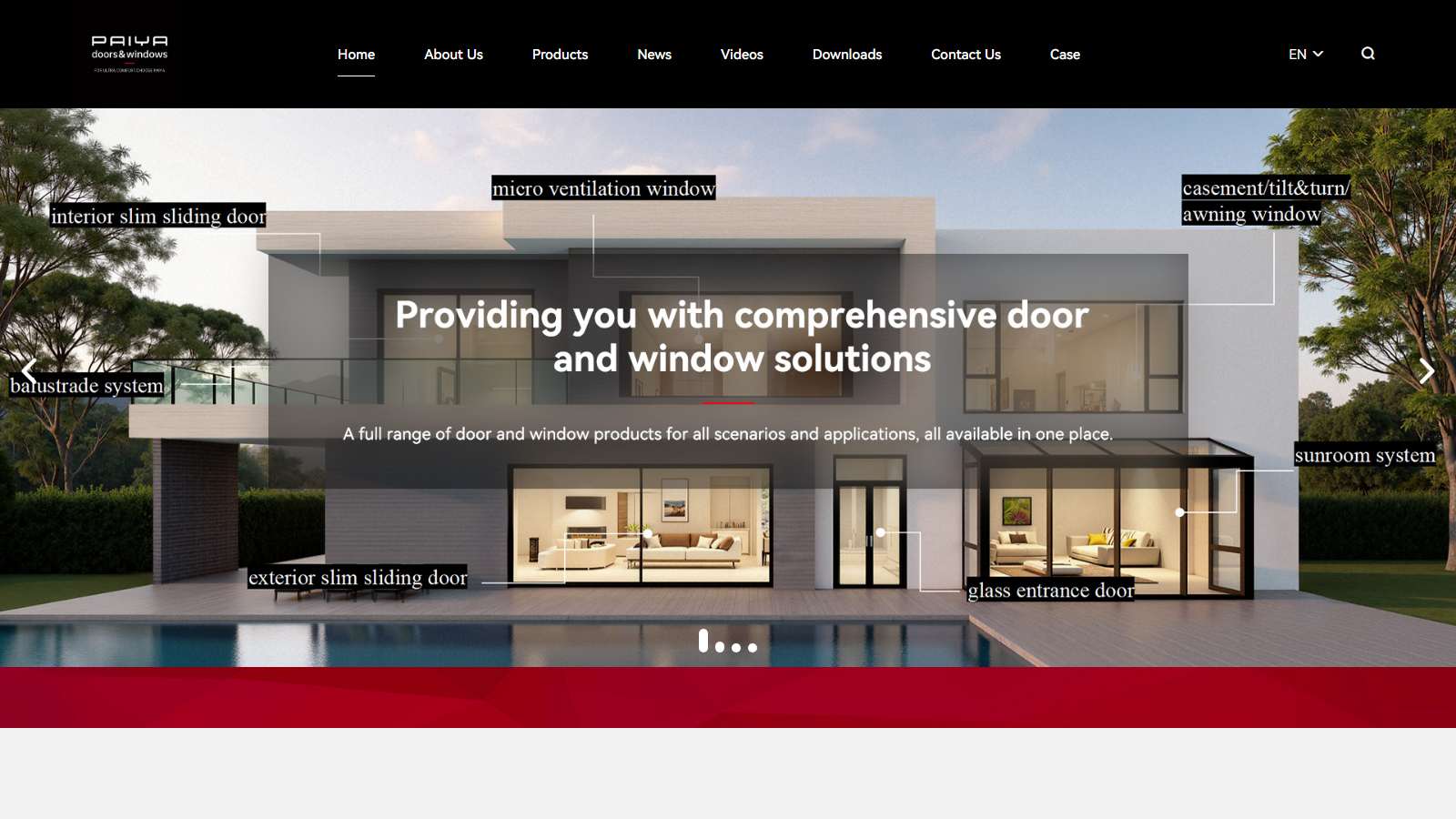
Website: https://www.paiyadoorwindow.com/
Headquarters / Supply Model: PAIYA Windows & Facades, founded in 1990 and headquartered in Lishui Town, Foshan, with a stated manufacturing area of 300,000 m², 160+ design options and a dealer network reported at over 1,000 outlets in China. Supplies distributors, developers, architects and contractors.
Core Products / Technologies: A compression sliding window page within a catalog that spans sliding systems, casement systems, entrance doors, sunrooms and shower enclosures. The brand positions around a "Deep Comfort" design philosophy covering thermal performance, safety and acoustics, and cites 35 years of development and manufacturing experience.
Why Consider PAIYA: This is a brand-scale supplier with a dedicated compression sliding window page, which is useful when you need consistent supply and marketing support rather than a single workshop. The dealer network and brand investment imply a product roadmap and after-sales structure, and a company that has been through several system generations is less likely to change hardware on you mid-project.
Best Suited For: Distributors building a branded range, and buyers who want a large, brand-backed supplier behind the product rather than a small factory.
Before Purchasing: PAIYA's own technical articles describe compression seals mainly in the casement context, so confirm the compression mechanism on the specific sliding model you are quoted — brush seal, multi-point gasket, or active compression. Request model-level test data and confirm the hardware platform and lead time for export orders.
9. China Loong Door-Window
Website: https://www.china-doorwindow.com/
Headquarters / Supply Model: China Loong Door-Window Co., Ltd., with 8,000 m² of production space, 86+ production and technical staff and 15+ years of manufacturing experience. Operates as a manufacturer and supplier with OEM/ODM programs for distributors and private-label buyers.
Core Products / Technologies: Side-pressure sealed sliding windows in 90 and 110 series, plus a 120 industrial-style sliding side-pressing window, alongside broken-bridge aluminum windows, casement, tilt-and-turn, top-hung and specialty windows. The catalog spans 35+ product categories including fire-rated, sound-insulated and bullet-proof options.
Why Consider China Loong: Three side-press series at different price points in one catalog is genuinely useful if you are building a tiered range — a 90 series for volume residential work and a 120 series for heavier commercial openings, sourced from one supplier with one documentation set. The broad catalog also means matching casement and specialty windows can come from the same order.
Best Suited For: Distributors and private-label buyers building a multi-tier side-press range, and buyers who need side-press windows alongside specialty or fire-rated units.
Before Purchasing: The company describes itself as both manufacturer and supplier, so confirm which lines are produced in-house and which are sourced. Ask for the hardware brand, the gasket specification and the compression stroke on each series, and request test reports rather than relying on the series naming.
10. ROPO (Fuzhou Ropo Building Materials)
Website: https://www.ropowindows.com/
Headquarters / Supply Model: Fuzhou Ropo Building Materials Co., Ltd., based in Fuzhou, Fujian, with a factory building area of more than 10,000 m², two production lines and eight production areas, and 16 years of operation. Serves export distributors and project buyers.
Core Products / Technologies: A "Parallel Opening Window" category alongside sliding, awning, casement, tilt and turn and folding windows. Certifications and test references include AS2047:2014, AS1288:2021, AGWA, NZS 4211:2008, NFRC, Miami-Dade TAS 201/202/203, NAMI and AAMA.
Why Consider ROPO: A parallel opening window reaches compression sealing by a different route — the sash translates outward before sliding, then closes onto the gasket — which solves the same airtightness problem as a side-press system but with different hardware and a different cost structure. ROPO also carries the deepest test stack in this list, including Australian, New Zealand and Florida approvals, which matters if your project has to clear a specific code path.
Best Suited For: Australian, New Zealand and US buyers who need documented test compliance, and projects where a parallel opening system suits the opening better than a side-press slide.
Before Purchasing: Confirm that the certification you need actually covers the parallel opening system and your sash size, since certificates are configuration-specific. Compare the hardware cost and serviceability against a side-press system before assuming the two are interchangeable — they solve the same problem with different mechanisms.
Cost of Sourcing Compression Sliding Windows from China
In this category the hardware usually costs more than the profile, which is the opposite of a standard sliding window. The table below shows where the money goes, so you can compare quotes that look similar on paper.
| Cost Factor | Why It Moves the Price |
|---|---|
| Compression hardware set | The locking and translation mechanism is the single largest differentiator. A genuine side-press set costs several times a standard roller and latch, and branded sets cost more again. |
| Profile series and thermal break | A 90 series and a 120 series are not interchangeable. Deeper profiles and wider polyamide strips raise material cost but carry larger sashes and better Uf. |
| Gasket system | EPDM compression gaskets versus brush pile change both the seal quality and the price. Brush seals are cheaper but cannot deliver a compression cycle. |
| Sash size and weight | Larger sashes need heavier hardware, more locking points and thicker profiles; the compression stroke also has to be engineered for the panel weight. |
| Glazing build-up | Double versus triple glazing, laminated glass and Low-E coatings change cost and weight, which then feeds back into hardware selection. |
| Performance testing | Air, water and wind reports for the exact configuration cost money. A supplier quoting a tested system will price the testing into the order. |
| Finish and colour | Standard powder coat versus special RAL, anodizing or wood grain affects price and lead time, and small colour batches carry setup cost. |
| Packing and logistics | Compression hardware is easily damaged in transit. Export crating and corner protection affect damage rates and landed cost more than the ex-works price suggests. |
FAQs – Compression Sliding Windows from China
What exactly is a compression sliding window?
It is a sliding window whose sash travels horizontally and then, at the end of the closing stroke, is pulled or pressed against a continuous gasket so all four sides compress. In Chinese it is sold as 推拉压紧窗 or 侧压推拉窗; in English you will see side-compression, press-seal and slide-and-press. A standard sliding window with a brush seal is not the same product.
How do I tell a real compression system from a marketing claim?
Ask two questions: does the sash translate toward the frame at the end of the stroke, and by how many millimetres? A genuine system has a measurable compression stroke and a locking mechanism that pulls the sash in. If the supplier cannot state the stroke, it is probably a brush seal with better advertising.
Is a compression sliding window as airtight as a casement?
A well-engineered side-press system closes much of the gap, and some manufacturers publish air permeability grades comparable to casement systems. It is still a different mechanism with more moving parts, so ask for the tested grade on your sash size rather than accepting a series-level claim.
What hardware should I specify?
Ask for the hardware brand, the compression stroke, the number of locking points and the cycle rating. Branded side-press hardware from established suppliers is easier to service and reorder than a proprietary set, which matters when a project runs for several phases.
What is a typical minimum order and lead time?
Policies vary from single sample windows to container minimums, and lead time depends on hardware availability, profile stock, glazing and finish. Because compression hardware is often imported or sourced in batches, confirm the hardware lead time separately from the profile lead time.
Which tests should I ask for?
Air permeability, water tightness and wind load resistance for the exact sash size and configuration, referenced to the standard your market uses — GB/T 7106 in China, EN 12207/12208/12210 in Europe, AS 2047 in Australia, or AAMA/NFRC in North America. A report for a smaller fixed unit does not validate a large opening sash.
Can these windows be supplied in custom sizes and colours?
Most manufacturers offer custom widths, heights, RAL colours and glazing options. Confirm that the compression hardware is rated for your sash weight, and that the finish you choose is available on the specific series rather than only on the standard range.
How should I compare quotes from different suppliers?
Normalize on five points: hardware brand and stroke, profile series and thermal break width, gasket type, glazing build-up, and the tested performance grade. A cheaper quote usually differs on one of these, and the hardware is the most common place where cost is removed.
Who Is the Best Compression Sliding Window Manufacturer?
There is no single "best" manufacturer in this category, because the right partner depends on whether you need a true compression cycle, a documented test package, or volume with brand support. A buyer replacing leaky sliding windows in a coastal apartment tower has different priorities from a distributor building a tiered product range.
For buyers who need sliding systems as part of a broader package — windows, doors, sunrooms and curtain wall under one quality system — Taiyang is worth shortlisting. The factory in Nantong, Jiangsu runs ISO 9001, ISO 14001 and ISO 45001 systems with a 21,193 m² facility and roughly 20,000 m² of monthly capacity, and its sliding range is built around multi-point sealing at the panel interfaces, which is particularly relevant when the same unit has to perform across a multi-building project rather than a single villa.
When you request a quote from Taiyang, include the following parameters so the engineering team can return an accurate, comparable offer: opening type (side-press slide, lift-and-slide or standard slide), sash width, height and estimated weight, required compression stroke if specified, profile series and thermal break width, gasket type, glazing build-up and Ug value, target air and water class with the standard referenced, wind load and building height, hardware brand preference, surface finish and RAL colour, quantity and size schedule, project location and climate, and your required delivery window.


