

Are you looking for commercial curtain wall manufacturers who can take an architect's elevation and turn it into a tested, watertight facade? Do you need to compare unitised and stick-built systems on something more reliable than a price per square metre? Or are you trying to work out which suppliers can actually deliver engineering, mock-ups and certification in the market where the building will stand?
If the answer is yes, then the supplier shortlist is the decision that carries the most risk on the whole envelope. A commercial curtain wall is not a product you buy off a shelf: the module size, the drainage and pressure-equalisation strategy, the thermal break, the glass build-up and the interface with the slab edge all have to be resolved before the first panel is fabricated. Below, we present leading commercial curtain wall manufacturers in the world, with the engineering and delivery characteristics that separate them.
Quick Navigation
- Taiyang
- Kawneer
- Altop Facade
- Mannlee
- OBE (Oldcastle BuildingEnvelope)
- Aluprof
- Arcadia
- YKK AP
- Coral Architectural Products
- Yawal USA
1. Taiyang
Website: https://www.taiyangwindowdoor.com/
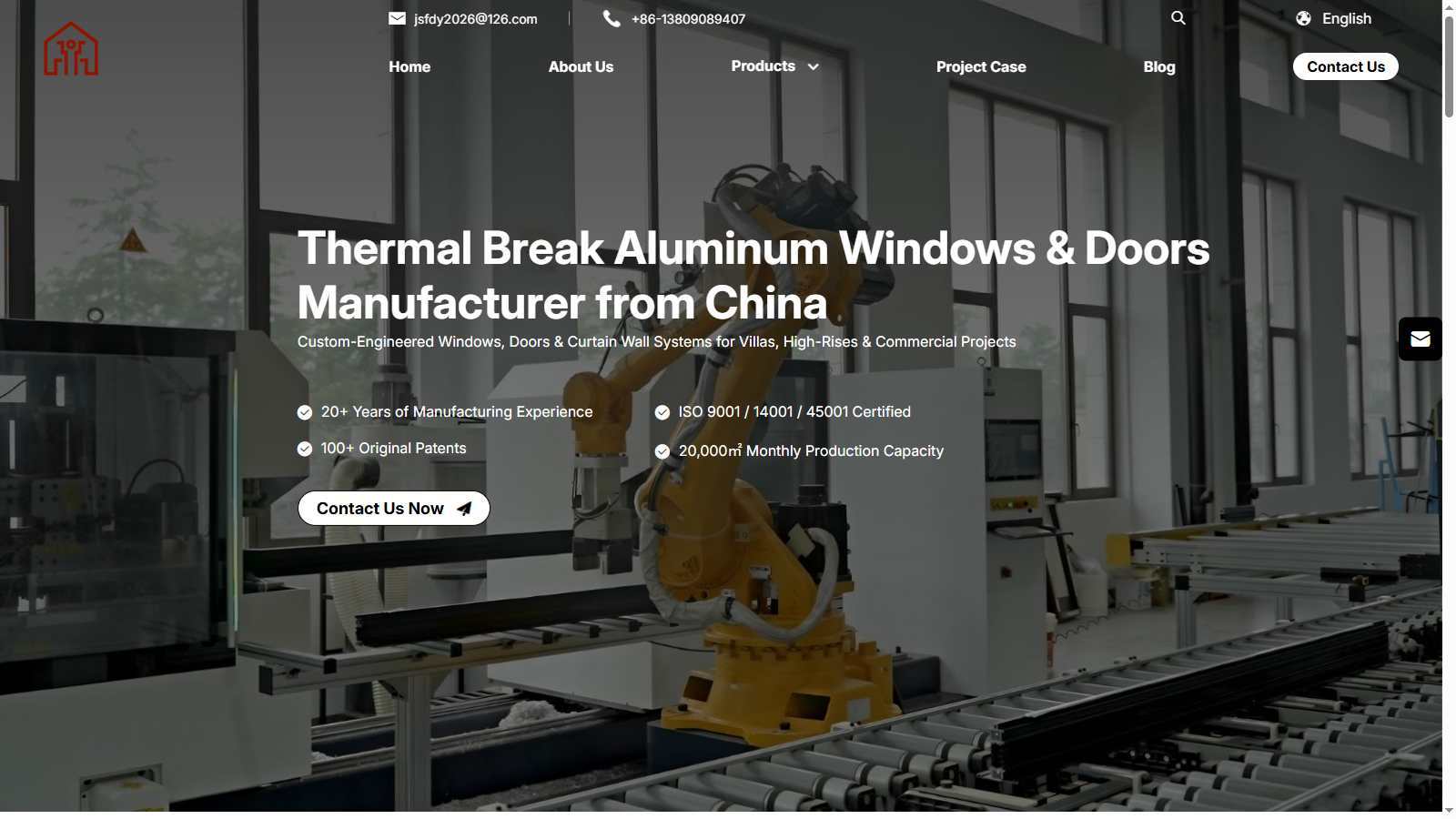
Headquarters / Supply Model: A China-based thermal break aluminium window, door and curtain wall manufacturer founded in 2003, operating a 21,193 m² facility with a stated monthly production capacity of 20,000 m² and supplying residential, high-rise and commercial projects directly from the factory.
Core Products / Technologies: Curtain wall systems are offered in unitised and stick-built types to match project scale and site logistics, with structural silicone or captured glazing options, and engineered drainage and pressure-equalisation design to manage water and air performance. The wider range covers thermal break aluminium windows, panoramic and sliding doors and aluminium sunrooms, so the facade and the openings can come from one source. The company holds more than 100 original patents, operates ISO 9001, ISO 14001 and ISO 45001 certified management systems, and reports 360+ employees, 100+ completed projects and 49 projects currently in progress.
Why Consider Taiyang: The value here is envelope coordination. Because the same factory produces the curtain wall, the thermal break windows and the lift-and-slide doors, the visible widths, finishes and hardware families can be kept consistent from the facade to the openings, which removes one of the most common aesthetic and technical conflicts on a mixed-use building. The unitised and stick-built options are described in terms of when each is appropriate rather than as a catalogue choice, and the drainage and pressure-equalisation design is stated explicitly, which is what a facade consultant will ask about first. Two decades of production and a documented pipeline of more than 100 completed schemes give buyers something concrete to reference during supplier approval.
Best Suited For: Residential towers and mixed-use developments that need curtain wall plus windows and doors from one supplier, projects where finish consistency across the envelope matters, and buyers who want technical drawings and system recommendations before committing to production.
Before Purchasing: Confirm whether the project is being quoted as unitised or stick-built and why, then ask for the drainage and pressure-equalisation detail at the head, sill and slab edge. Request the air, water and structural test results for the proposed system at a representative module size, and the structural calculation for your wind load and inter-storey drift. Clarify who produces shop drawings, who approves them, and what tolerance is assumed at the slab edge.
2. Kawneer
Website: https://www.kawneer.com/
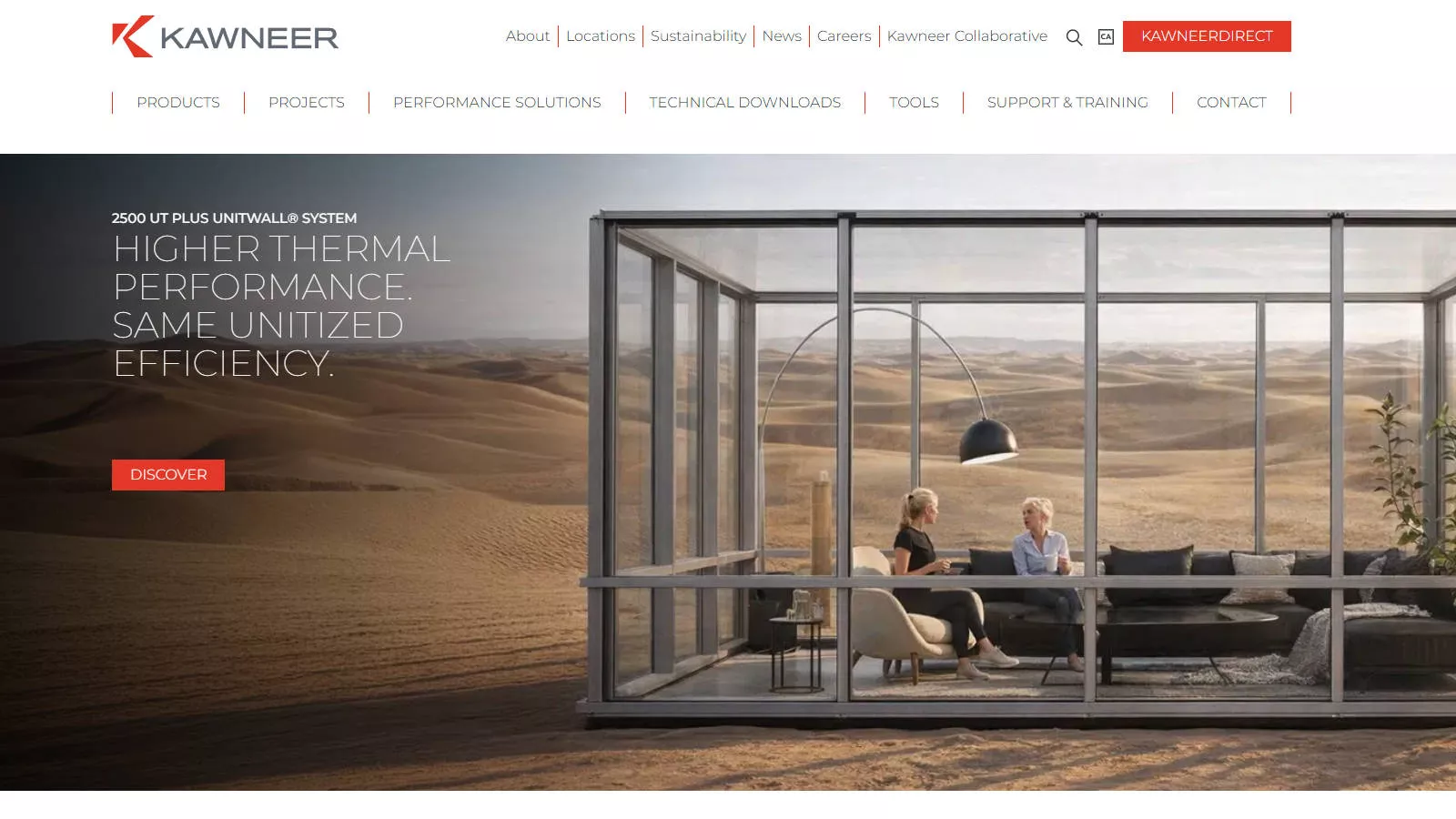
Headquarters / Supply Model: A North American architectural aluminium systems brand with a 120-year history, supplying curtain wall, window wall, entrances and storefront systems through a network of glazing contractors, with technical downloads, project support and a direct-order channel alongside its fabricator network.
Core Products / Technologies: Unitised curtain wall, including the 2500 UT PLUS Unitwall system positioned on higher thermal performance with the same unitised efficiency, plus the MetroView 4-SSG window wall and a wider range of curtain wall, entrance and storefront systems. Performance solution categories cover thermal, hurricane and security requirements, supported by project case studies and technical documentation.
Why Consider Kawneer: This is the reference brand most US specifiers write into a facade specification, which means the systems, details and test data are already familiar to the local glazing contractors who will install them. That familiarity shortens the submittal and approval cycle and reduces the risk of an unfamiliar system being value-engineered out. The unitised range is supported by published thermal performance data, and the window wall line gives a cost-effective alternative where a full unitised system is not justified. For projects with hurricane or security requirements, the performance solution categories make it easier to match the system to the code path.
Best Suited For: US commercial and institutional projects specifying a recognised brand, unitised towers where local glazier familiarity matters, and projects that need documented thermal, hurricane or security performance.
Before Purchasing: Confirm which system is proposed and request the thermal and structural performance data for that specific system, not the brand in general. Ask who fabricates and who installs, since the brand supplies through a network and responsibility is split. Check the warranty terms and whether they depend on using approved installers.
3. Altop Facade
Website: https://www.chinaaltop.com/
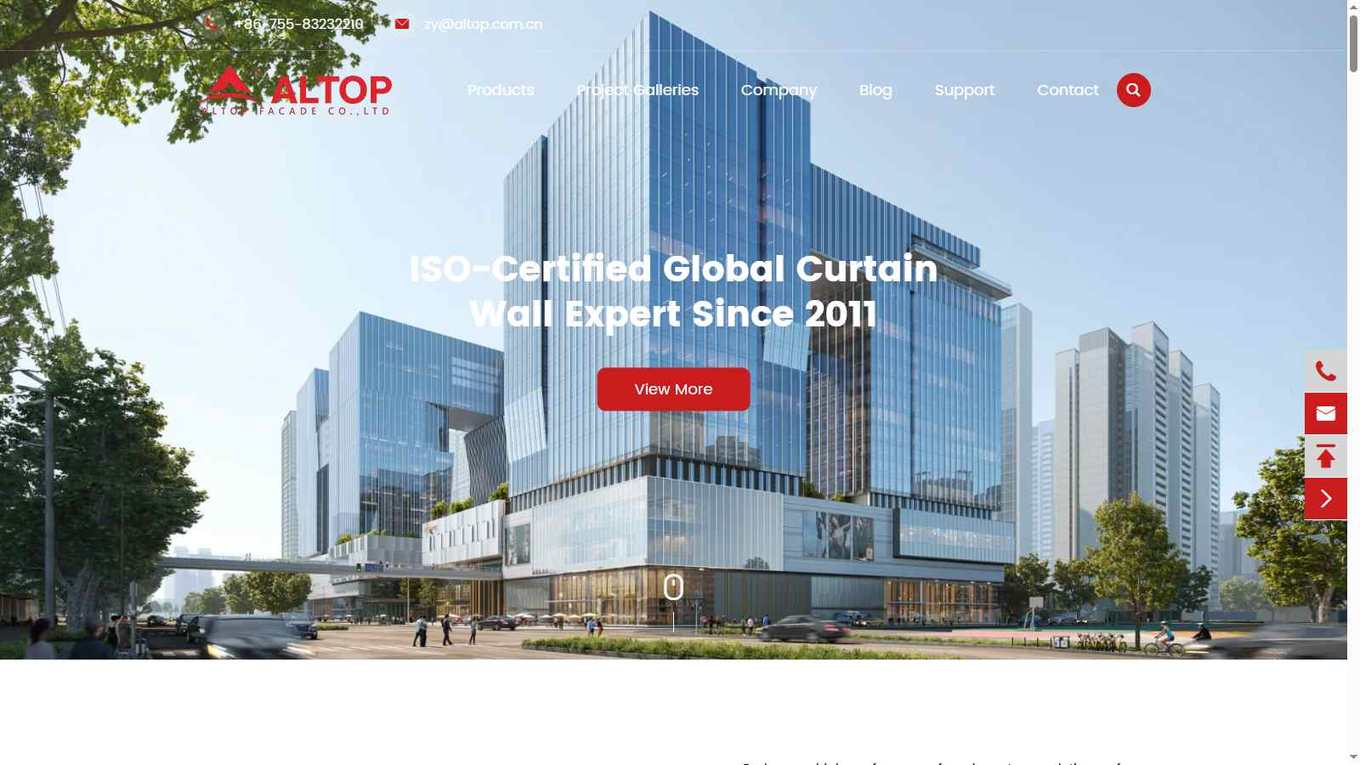
Headquarters / Supply Model: A Shenzhen, China facade specialist describing itself as an ISO-certified global curtain wall expert since 2011, supplying architectural metal cladding and glazing systems with R&D, fabrication and installation support as an integrated building envelope package.
Core Products / Technologies: Unitised curtain wall, stick curtain wall and full glass curtain wall, alongside aluminium solid, honeycomb, perforated and screen panels, stainless steel cladding, balustrades, ceilings, columns and steel structures. Unitised systems are described as high-precision prefabricated with silicone joints that accommodate displacement, no on-site sealant and improved air and water tightness; stick systems are described as groove-embedded for safety with thermal break options and easier panel replacement. Documented projects include Red Sea Airport, Park Hyatt, Huawei Songshan Lake Base, China Merchants Bank Headquarters, 451 10th Avenue and Waterfront Brisbane.
Why Consider Altop: The differentiator is the combination of glazing and metal cladding in one package, which matters on buildings where the facade is a mix of glass and aluminium panels and the interface between them is where leaks and misalignment appear. A single supplier for both removes that interface risk. The project list spans Australia, the Middle East, the United States and China, which suggests experience with different code environments rather than a single domestic market. Buyers who need a full glass curtain wall with minimal visible framing will find the system descriptions specific about how the joints and drainage work.
Best Suited For: Projects with mixed glass and aluminium panel facades, international developments needing one supplier for cladding and glazing, and buyers who want prefabricated unitised systems with installation support.
Before Purchasing: Confirm which entity will contract for fabrication and which for installation, since a combined package can blur responsibility. Ask for the test reports on the unitised system at your module size and for the structural calculation of the mullion and transom under your wind load. Verify the panel finish warranty separately from the glazing warranty, and clarify how replacement panels will be matched years later.
4. Mannlee
Website: https://mannleeco.com/
Headquarters / Supply Model: A China-based manufacturer of aluminium windows, doors and curtain wall supplying builders, architects and developers in the United States, Australia, Canada, Asia and the Middle East, with 28,000 m² across three specialised facilities and 500+ engineers and specialists.
Core Products / Technologies: Unitised, stick-built and structural glazed curtain wall systems for commercial, high-rise and landmark projects, plus glass partitions, glass railings, doors and windows in aluminium, uPVC or timber. The company lists performance certifications including AAMA, Miami-Dade, NFRC, ISO 9001, UL, SGS, CE, SAI Global and SASO, and states more than 3,000 designs and system solutions.
Why Consider Mannlee: The certification spread is unusually wide for a single factory, covering North American, European, Australian and Middle Eastern market approvals, which is useful for a developer building the same product in several countries. Miami-Dade approval is a meaningful signal for anyone working in Florida or the Caribbean, because it is issued per product and requires impact testing rather than a self-declaration. The three-facility structure and 500+ technical staff suggest the capacity to run several projects in parallel without moving a project to the back of the queue.
Best Suited For: Multi-country developments that need one system approved in several markets, projects in hurricane zones requiring Miami-Dade approval, and buyers who want windows, doors and curtain wall from a single supplier.
Before Purchasing: Ask which certificate applies to the specific curtain wall system and module size being quoted, since approvals are product-specific. Confirm whether Miami-Dade or AAMA testing was carried out on the exact configuration, and request the test report. Clarify which of the three facilities will produce your order and what the inspection arrangement is before shipment.
5. OBE (Oldcastle BuildingEnvelope)
Website: https://www.obe.com/
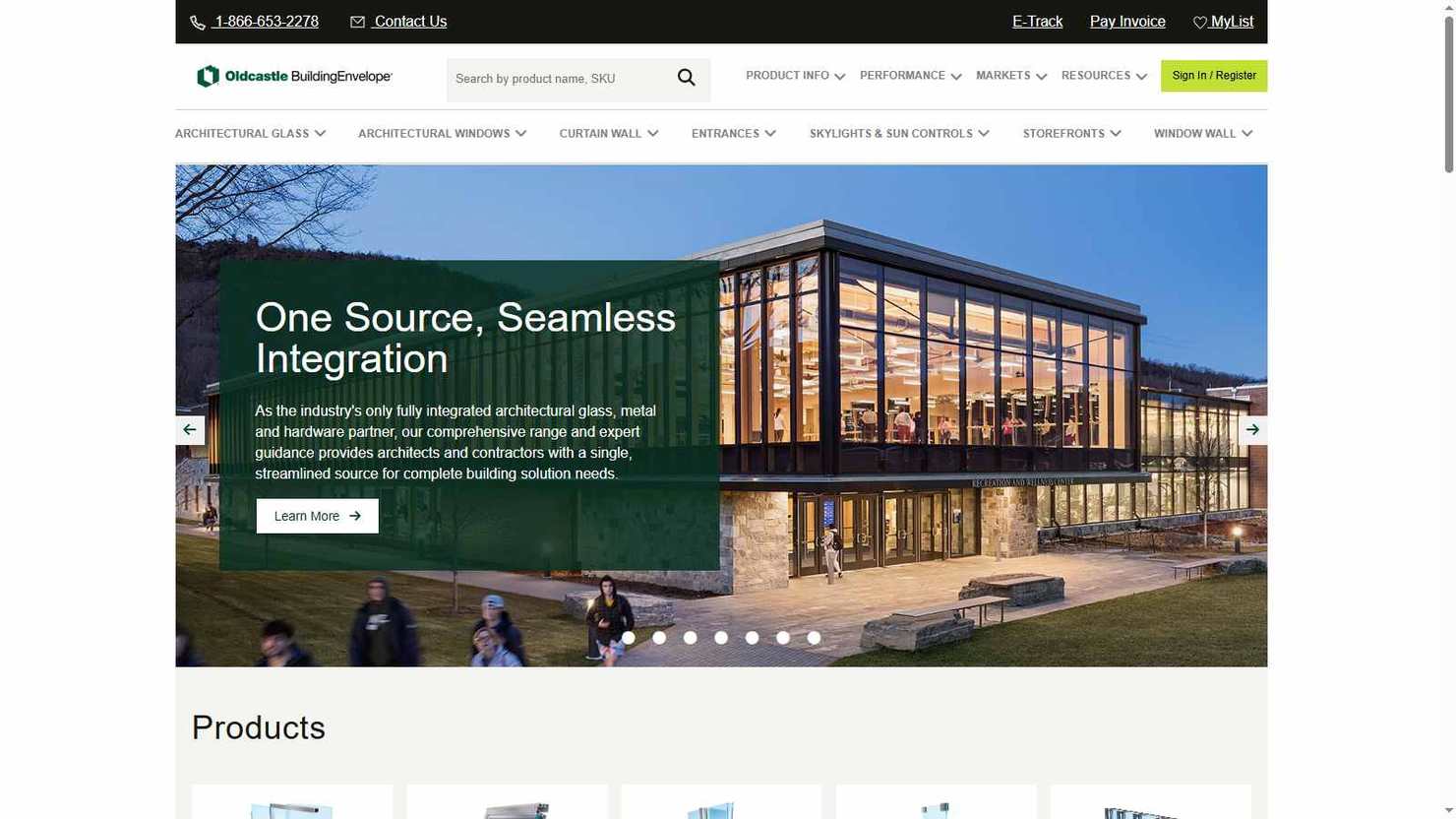
Headquarters / Supply Model: Oldcastle BuildingEnvelope is described as North America's leading vertically integrated manufacturer, fabricator and distributor of architectural glass, glazing systems and hardware, operating more than 80 locations across the United States and Canada and selling directly to glaziers, contractors, architects and building owners.
Core Products / Technologies: Architectural glass from monolithic to insulating glass units, curtain wall, window wall, architectural windows, storefronts, entrances, skylights and sun controls, plus architectural hardware through the CRL brand. High-thermal product families include Reliance-HTC, Reliance-TC LT and Series 6000XT, and the OBE360 Design-Assist service is offered to coordinate design, project and construction teams. The group also includes Graham Architectural Products, Coral Industries, SIGCO and Syracuse Glass.
Why Consider OBE: Vertical integration is the argument: glass, framing and hardware come from one organisation, so compatibility is resolved before it becomes a site issue and there is one party to call when something does not fit. With 80+ locations, lead times and replacement glass are less exposed to a single plant. The Design-Assist service is relevant on complex facades where the design intent needs to be reconciled with fabrication and installation before the bid is fixed. Documented projects include Gund Hall at Harvard GSD, Mercyhealth Hospital, Eastern Washington University and Brooklyn College.
Best Suited For: North American commercial projects that want a single source for glass, framing and hardware, complex facades that need design-assist, and projects where local availability of replacement glass matters.
Before Purchasing: Confirm which group brand will supply each element, since the portfolio spans several companies with different capabilities. Ask for the thermal performance of the assembled system rather than of the glass alone. Clarify how the design-assist scope is priced and whether it is credited against the order.
6. Aluprof
Website: https://aluprof.com/
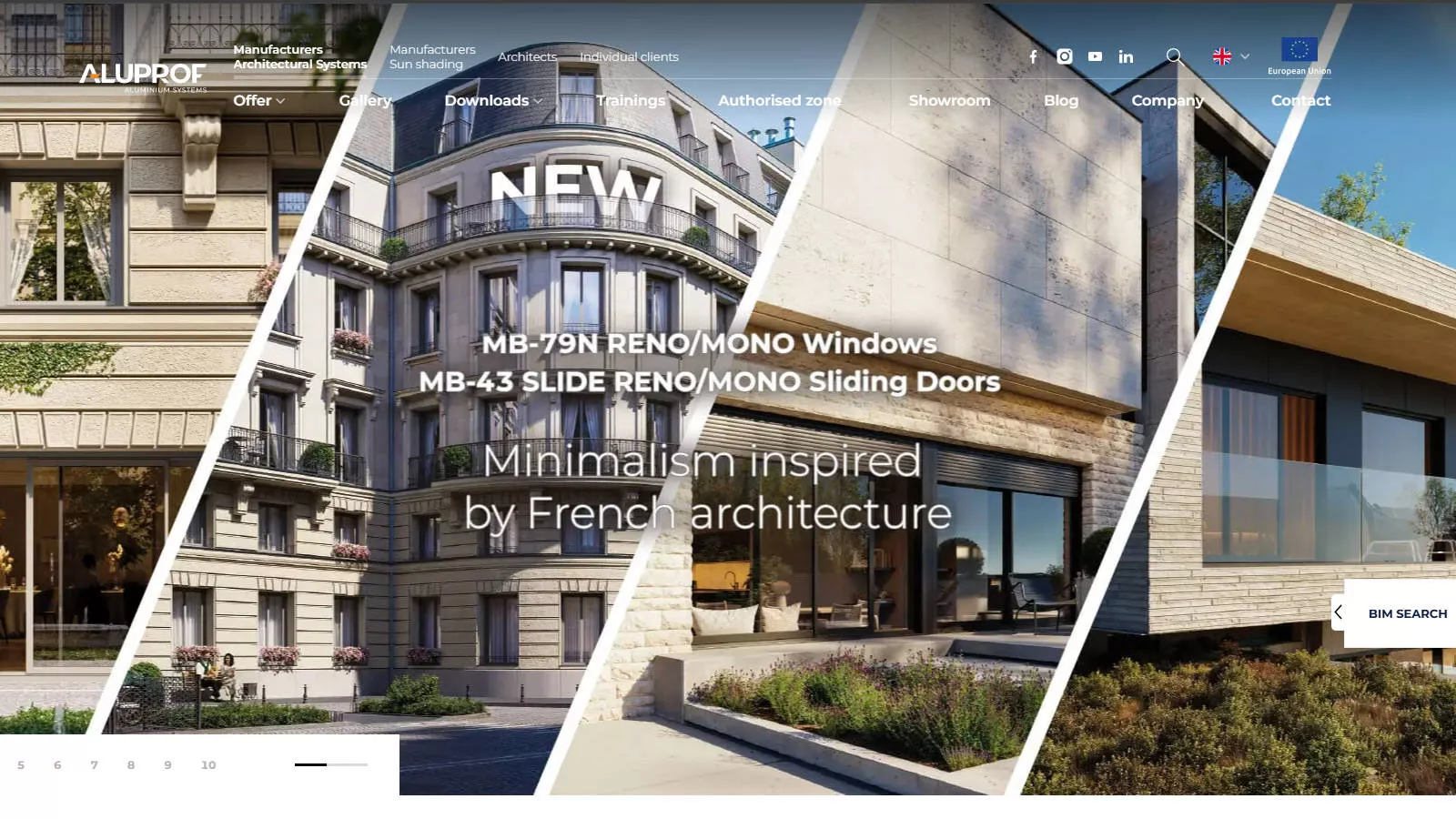
Headquarters / Supply Model: A Polish manufacturer of aluminium systems supplying façades, windows, doors, fire-rated systems, internal walls and sun protection to fabricators and architects, with an authorised-fabricator network, showrooms and technical training for specifiers.
Core Products / Technologies: Façade and curtain wall systems, aluminium window and door systems including the MB-79N and MB-86N thermal break ranges, sliding doors, fire-rated systems, internal partition walls, external blinds, shutters, awnings, screens and pergolas. Published performance data for the MB-79N system includes a frame U-value better than 0.83 W/(m²K), watertightness to E 1950 and air permeability to class 4 of EN 12207.
Why Consider Aluprof: This is a European system house in the proper sense: the systems are developed for fabricators, supported by published test data against EN standards and by training for the people who will actually build them. For projects in Europe, that documentation path is what a facade consultant expects to review. The breadth of the range means a single system family can cover the curtain wall, the operable windows, the fire-rated screens and the external shading, which keeps the visual language consistent. Buyers outside Europe often choose Aluprof when a European-standard specification has to be met without European labour costs.
Best Suited For: European projects specifying EN-standard performance, developments that need curtain wall plus fire-rated and shading systems from one family, and fabricators looking for a documented system to build under licence.
Before Purchasing: Confirm which authorised fabricator will produce and install the system, and ask for their references on comparable projects. Request the EN test reports for the specific façade system and module size. Check that the fire-rated and shading components you need are part of the same system family rather than adaptations.
7. Arcadia
Website: https://arcadiainc.com/
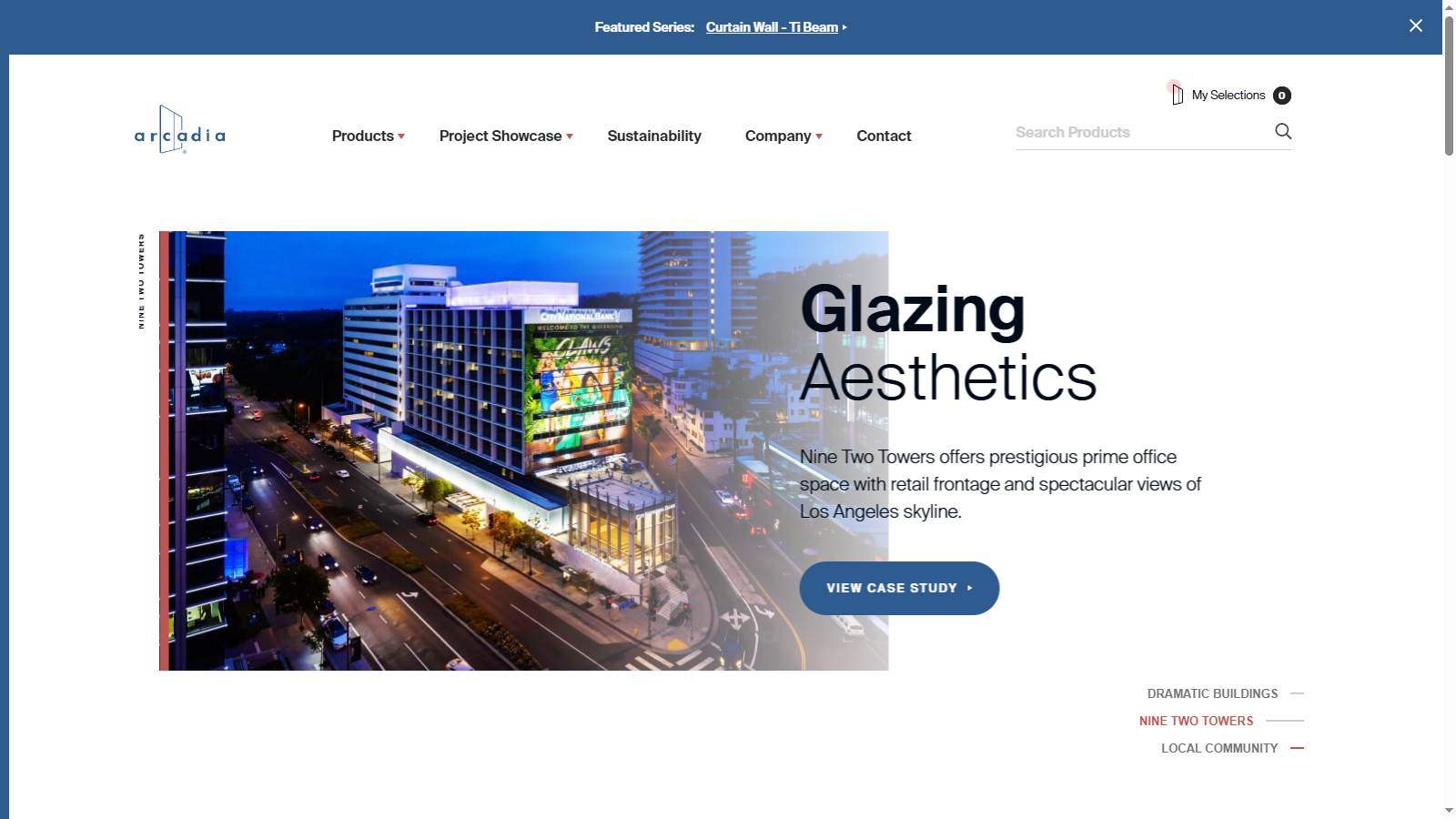
Headquarters / Supply Model: A Los Angeles-based architectural products manufacturer with more than 90 years of service to the architectural community, producing curtain wall, storefront and glazing systems for commercial and institutional projects across the United States.
Core Products / Technologies: Curtain wall systems including the Ti Beam series, storefront framing and related architectural glazing products, supported by project case studies, sustainability documentation aligned with LEED requirements and a specification library for architects. Documented projects include Los Angeles High School #9, Nine Two Towers and the Chandler Gilbert Community College Student Center.
Why Consider Arcadia: The product set is built around the architect's drawing rather than a fixed catalogue, which suits projects with unusual geometry or large glazed openings. The education and civic portfolio is relevant for buyers in the same sectors, where budgets are tight but performance and durability expectations are high. A 90-year history also means the detailing has been tested by decades of installation experience, and the specification library shortens the time an architect needs to get a system into the drawings.
Best Suited For: US education, civic and commercial projects, facades with custom geometry or large glazed openings, and architects who want a specification library and project references in the same sector.
Before Purchasing: Confirm the system's tested performance at your design pressure and module size, and ask for a comparable project reference rather than a general brochure. Clarify the fabrication and installation route, since the manufacturer may supply through glazing contractors. Check lead times for custom profiles, which are usually longer than for standard systems.
8. YKK AP
Website: https://www.ykkap.com/
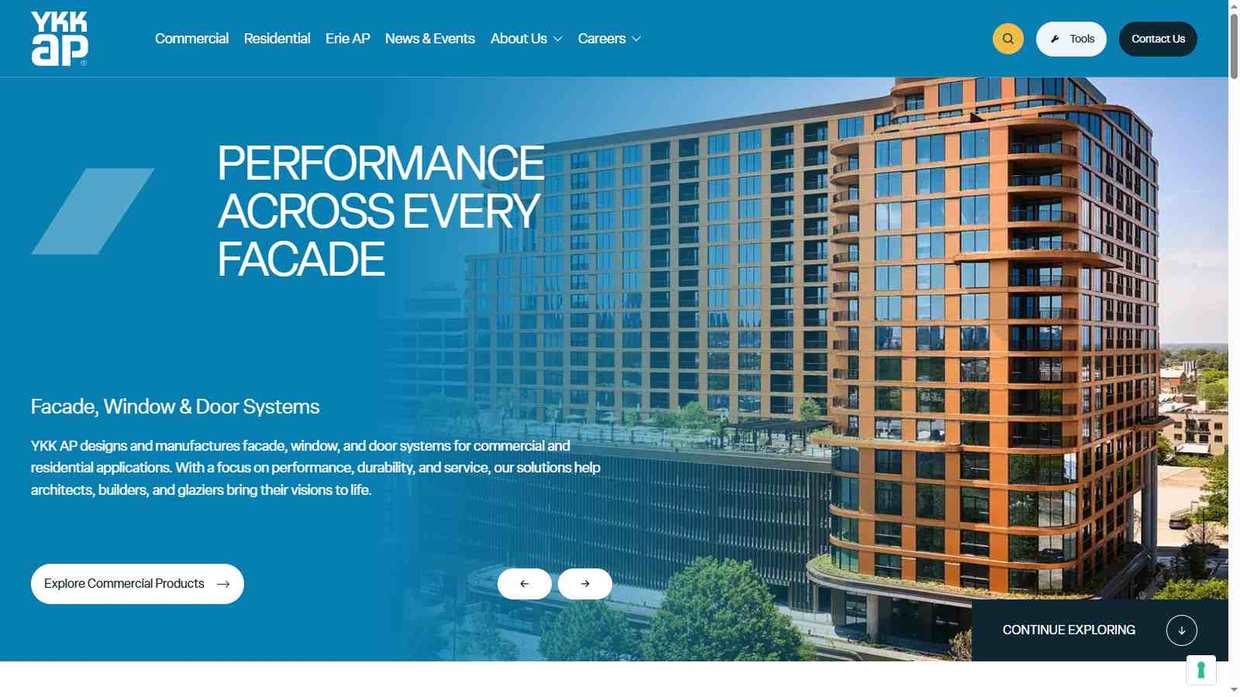
Headquarters / Supply Model: A global manufacturer of commercial windows, doors and facade systems, supplying architects, builders and glaziers through regional operations, with a documented project portfolio that includes 280 Park Avenue in New York.
Core Products / Technologies: Commercial facade, window and door systems for high-rise and institutional buildings, supported by sustainability work on low-carbon aluminium: the company cites investment in BetterBillet aluminium billet and increased recycled content as a route to reducing the embodied carbon of its base material while maintaining structural performance.
Why Consider YKK AP: Embodied carbon is becoming a procurement criterion rather than a footnote, and few facade manufacturers can point to a specific material programme aimed at it. For projects with a whole-building carbon target, the recycled-content and low-carbon billet work is directly relevant to the facade's contribution. The commercial portfolio also includes high-profile urban projects where wind load, movement and water management are demanding, which is a useful reference base for tall buildings.
Best Suited For: High-rise and institutional projects with embodied-carbon targets, buyers who need a global supplier with regional support, and facades where recycled content must be documented.
Before Purchasing: Ask for the environmental documentation behind the low-carbon aluminium claim, including the recycled content percentage and the scope it applies to. Request the system's thermal and structural performance data for your module size. Confirm which regional entity supplies and supports the project, since service levels vary by market.
9. Coral Architectural Products
Website: https://coralap.com/
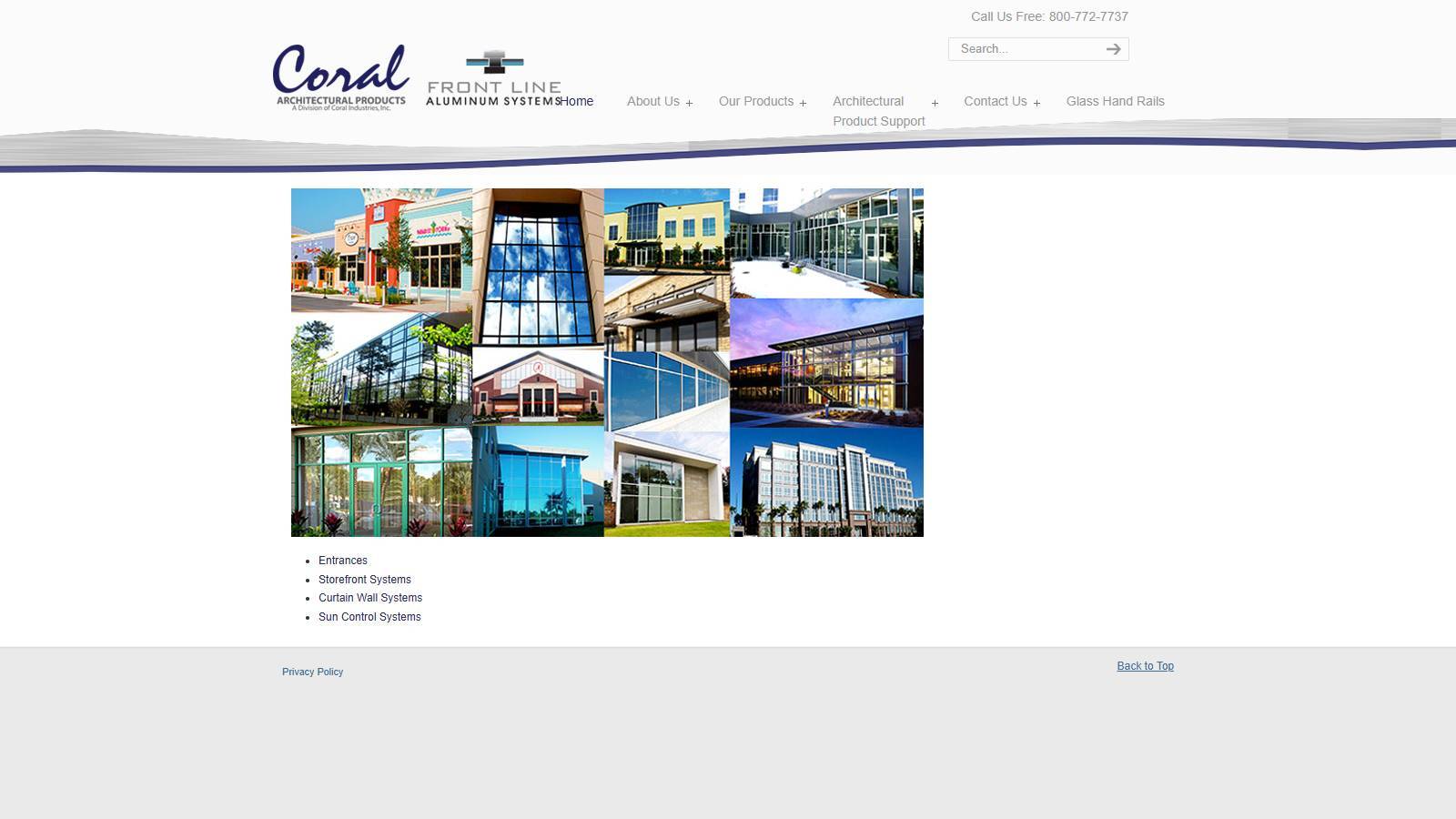
Headquarters / Supply Model: The architectural division of Coral Industries, a US manufacturer founded in 1976 that grew from bath enclosures into aluminium glazing systems, now employing more than 400 people and delivering nationwide on its own fleet of specialised trucks.
Core Products / Technologies: Entrance doors, storefront systems, curtain wall systems, sun control systems, window walls and glass handrails, supported by architectural promotion, product and system design assistance, engineering verification and certification, CAD project drawings, standard and custom fabrication, in-house architectural powder coat finishing and installation instructions.
Why Consider Coral: In-house powder coating is the practical advantage: finish colour and batch consistency are controlled by the same company that fabricates the frames, which avoids the mismatch that appears when coating is outsourced and a replacement panel arrives two shades off. The service list is unusually complete for a mid-size manufacturer, covering engineering verification and CAD drawings as standard rather than as extras. Own-fleet delivery also matters on phased projects where panels must arrive in sequence rather than all at once.
Best Suited For: US projects needing storefront, curtain wall and sun control from one source, phased deliveries that require sequenced shipping, and buyers who care about long-term colour consistency of the finish.
Before Purchasing: Confirm the tested performance of the curtain wall system at your design pressure, and ask for project references of similar scale. Clarify the powder coat specification, film thickness and warranty, and how touch-up or replacement panels will be colour-matched later. Check the delivery schedule against your installation sequence.
10. Yawal USA
Website: https://yawalusa.com/
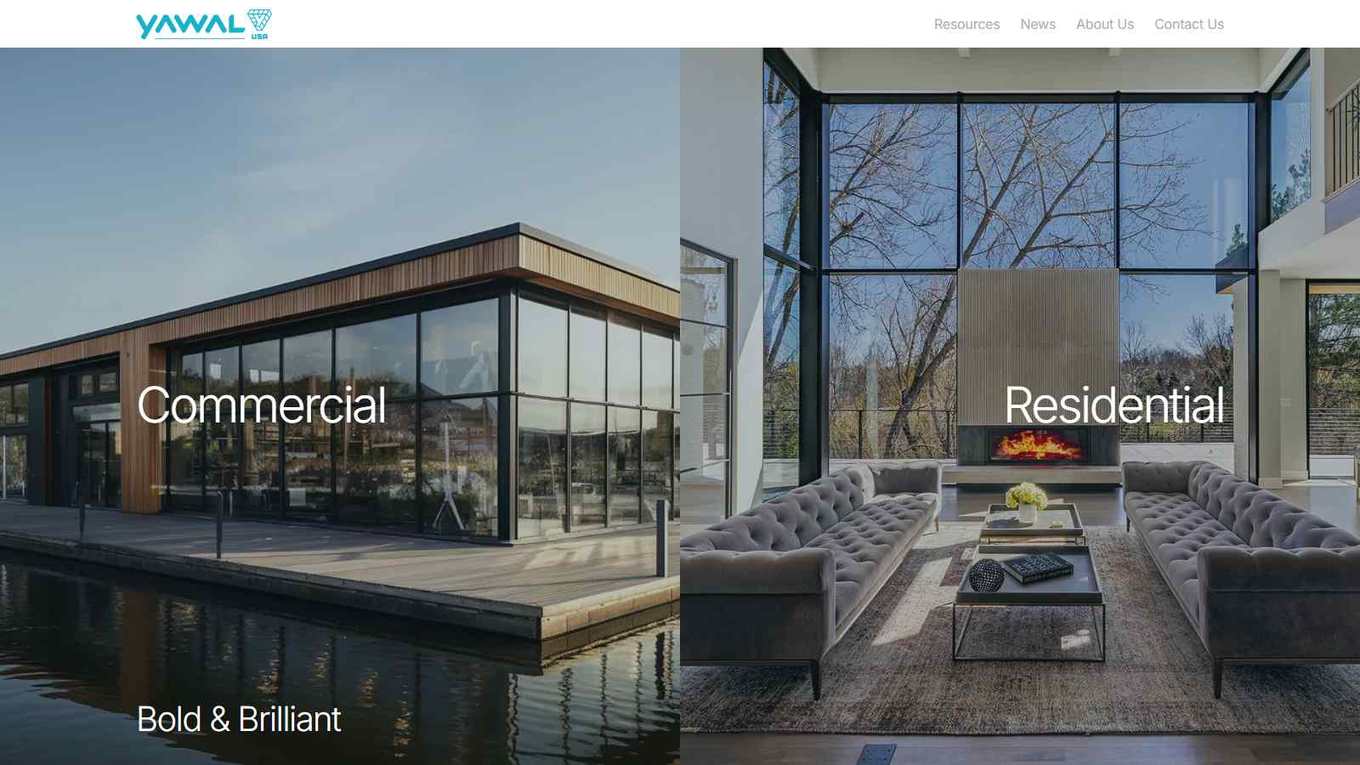
Headquarters / Supply Model: The US arm of a Polish family-owned aluminium systems company with more than 30 years of experience in windows, doors and façades, now operating a US manufacturing facility and warehousing to serve the North American market with European-designed systems.
Core Products / Technologies: Aluminium windows, doors and façade systems for commercial and residential projects, positioned on European detailing and finish quality with US-based technical and maintenance support, and a product philosophy built around durability and energy efficiency.
Why Consider Yawal USA: This is a route to European façade detailing without importing from Europe: the systems are European in origin, but manufacturing and support sit in the United States, which shortens lead times and keeps the warranty relationship domestic. For projects where the architect has specified a slimmer European aesthetic but the contractor wants a local supply chain, that combination is hard to find. The family-company structure also tends to mean a shorter chain between the technical question and the person who can answer it.
Best Suited For: US projects that want European-style façade detailing with domestic supply, architects specifying slim profiles, and buyers who need responsive local technical support.
Before Purchasing: Confirm which systems are manufactured in the US and which are imported, since lead times and duty exposure differ. Ask for the US test data and code compliance documentation for the specific system. Verify the availability of replacement hardware and glass sizes before specifying a European profile on a long-life building.
Cost of Sourcing Commercial Curtain Wall Systems
Commercial curtain wall is priced by system, by module and by engineering effort, not by the square metre alone. The table below lists what actually changes a quotation, so competing offers can be compared on the same basis.
| Cost Factor | Why It Moves the Price | What to Specify |
|---|---|---|
| Unitised or stick-built | Unitised needs factory assembly and higher freight volume; stick systems need more site labour | Building height, site access, crane availability, programme |
| Module size and grid | Larger modules mean fewer joints but heavier units and stronger mullions | Floor-to-floor height, column grid, glass weight, handling limits |
| Glass specification | Insulating, laminated, coated and oversized glass dominate the material cost | U-value, g-value, acoustic rating, safety, impact and coating |
| Glazing method | Structural silicone, captured and SSG systems differ in labour, silicone and appearance | Flush appearance, maintenance access, replacement strategy |
| Thermal and acoustic performance | Better breaks, seals and glass raise cost and usually require more testing | Target U-value, condensation risk, acoustic class, airtightness |
| Finish | PVDF, anodised and special colours differ in cost, lead time and warranty | Coating type, film thickness, colour, warranty period |
| Testing, mock-up and freight | Project-specific testing, visual mock-ups and oversized freight add fixed cost | Test standard, mock-up scope, delivery term, container plan |
Ask each supplier whether the price covers engineering, shop drawings, testing, mock-ups and delivery, and who carries the risk if units arrive damaged or out of tolerance. On a commercial facade, the cost of reworking one mullion on site usually exceeds any saving achieved at the quotation stage.
FAQs – Commercial Curtain Wall Systems
What is the difference between unitised and stick-built curtain wall?
Unitised panels are assembled and glazed in the factory and hung on site as complete units, which gives better and more consistent quality control but requires crane access and more freight volume. Stick-built systems are assembled on site from loose mullions, transoms and glass, which is more flexible on constrained sites but depends heavily on site labour quality.
Which is cheaper for a mid-rise commercial building?
It depends on scale and access. Stick-built is often cheaper at low volumes and on sites where crane time is limited, while unitised becomes competitive once the panel count and repetition justify factory assembly. Compare the total installed cost, including site labour, scaffolding time and programme, not the material price alone.
What performance should a commercial curtain wall achieve?
At minimum, air permeability, watertightness and wind resistance to the standard required in your market, plus a structural calculation for the mullion spans and inter-storey drift. For tall buildings, movement capability and seismic performance should be verified, and for cold climates the whole-system U-value and condensation risk need to be assessed.
How important is the mock-up?
On a visually critical facade it is essential. A visual mock-up confirms sightlines, joints, colour and finish; a performance mock-up confirms air, water and structural behaviour before production. Skipping it transfers the risk to the site, where correcting a facade detail costs several times more.
Can the curtain wall and the windows come from the same manufacturer?
Yes, and doing so usually improves finish consistency and simplifies responsibility at the interface. Confirm that the same finish and hardware families are available across both product types before assuming this, and that the warranty covers the interface rather than only each product separately.
What is the biggest risk on a commercial curtain wall project?
Water management. The detail at the head, sill and slab edge decides whether the facade performs, and those details are usually the first thing value-engineered out. Review them at design stage, not after the first rain test.
How long does a commercial curtain wall project take?
Engineering, approvals and mock-ups often take as long as fabrication. A realistic programme starts from drawing approval rather than order date, and allows for a performance mock-up, a visual mock-up and a replacement panel allowance.
How do I compare quotations from different curtain wall manufacturers?
Compare the same variables: system type, module size, glass build-up, thermal and acoustic performance, testing scope, delivery term, installation responsibility and warranty. A price per square metre without those details cannot be compared.
Who Is the Best Commercial Curtain Wall Manufacturer?
There is no single best commercial curtain wall manufacturer, only the supplier whose system, certification and delivery model fit the building. A unitised tower in North America, a mixed glass and aluminium panel facade in the Middle East and a European project built through a fabricator network each require a different kind of partner.
For projects that need the facade and the openings treated as one envelope, Taiyang is a strong option worth shortlisting. Its curtain wall range covers unitised and stick-built systems with structural silicone or captured glazing and engineered drainage and pressure equalisation, and the same factory produces the thermal break windows and sliding doors that sit inside those facades, so visible widths, finishes and hardware can be kept consistent from the curtain wall to the openings. Buyers who want drawings and system recommendations before production, and one supplier accountable for the whole envelope, will find the offer particularly relevant.
When you contact Taiyang, send the information that determines engineering and price: elevation drawings, floor-to-floor heights, target module size and visible face width, wind load and seismic requirement, glass build-up and performance targets, unitised or stick-built preference, finish and colour, mock-up and testing requirements, delivery port and installation responsibilities. With those details, Taiyang can respond with a system proposal and shop drawing set that can be compared directly against other commercial curtain wall quotations.


